
Wilbraham’s First Ambulance: A Community’s Lifesaving Effort
- Dec 5, 2025
- 4 min read
Updated: Dec 11, 2025
In the early 1950s, the Town of Wilbraham took a decisive step forward in emergency medical care, thanks to the dedication and foresight of the Wilbraham Grange No. 153. Recognizing the growing need for timely medical transportation, the Grange’s Home and Community Service Committee spearheaded a fund drive to provide the town with its very first ambulance. After extensive community support and fundraising, the effort succeeded in acquiring a 1952 Dodge Franklin Deluxe model, a vehicle that represented the latest in emergency medical transportation at the time.

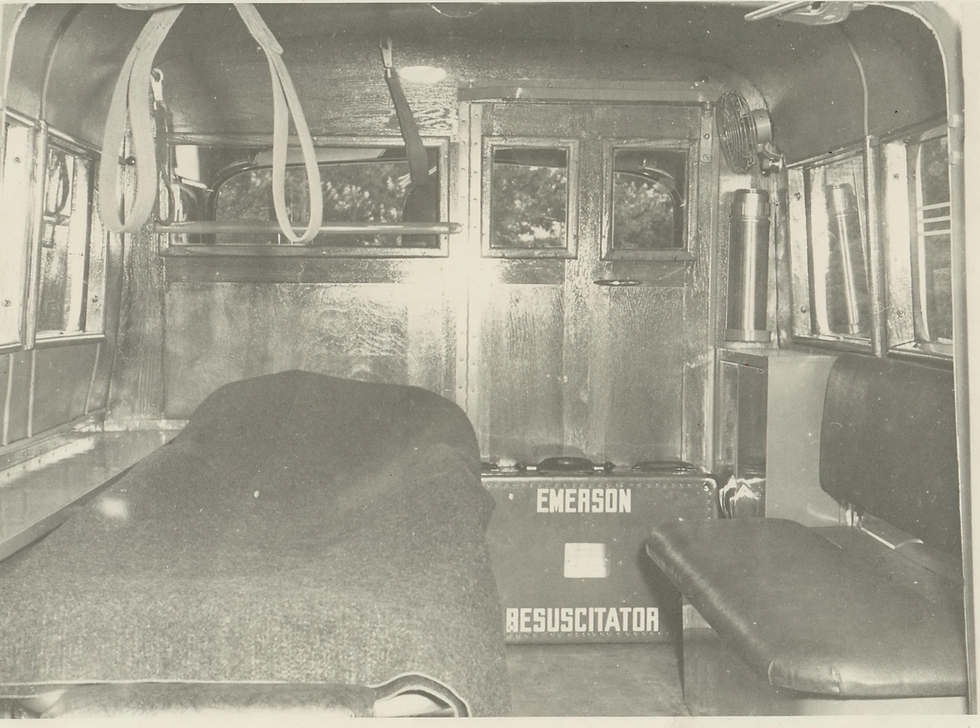
This ambulance was designed to be operated by the Wilbraham Fire Department and was intended solely for life-threatening situations. Its use was restricted to emergencies ordered by a physician, ensuring that it served those in the most critical need. For Wilbraham, this represented a major advancement. Before its arrival, there was no dedicated vehicle for transporting patients to hospitals in urgent situations, leaving the community vulnerable during medical emergencies.
The impact of the new ambulance was immediate. Only two days after its delivery, on August 21, the vehicle was called into action for the very first time. A four-year-old girl had nearly drowned in Nine Mile Pond. The Wilbraham Fire Department responded swiftly, bringing the ambulance to the scene. Firefighters utilized a resuscitator that had been donated two years earlier by the Wilbraham Lions’ Club to revive the young girl. She was then transported to Springfield Hospital, where she was admitted in fair condition. Thanks to the rapid response and the life-saving measures taken by the department, the girl eventually made a full recovery.
Reflecting on the event, Fire Chief Ralph Tupper remarked, “We got the vehicle only two days ago, and it could very well mean the difference between life and death for this little girl.” His statement captured not only the urgency of that singular moment but also the broader significance of the ambulance for the town.
The purchase of the ambulance highlighted the Wilbraham Grange’s commitment to public service and the town’s dedication to safeguarding its residents. It also underscored the cooperative spirit of the community, as civic organizations like the Grange and the Lions’ Club worked hand in hand with the fire department to enhance public safety. The 1952 Dodge Franklin Deluxe ambulance would serve the town for many years, providing critical care and transportation in emergencies and establishing a precedent for modern emergency services in Wilbraham.
Wilbraham’s commitment to emergency preparedness extended beyond equipment. The Wilbraham Fire Department was also a pioneer in medical training. In 1950, members of the department became the first in the Springfield area to be trained and certified in both regular and advanced first aid. The training was part of an “intensive” thirty-hour program sponsored by the American Red Cross. Certificates were presented on August 18, 1950, by Eugene H. Wessels, director of Safety Services for the Red Cross in the Springfield area. Speaking at the ceremony, Wessels said, “I am proud of the opportunity to be a part of this ceremony, which makes the Wilbraham Fire Department the first group of its type in the Springfield area to be so honored.”

Together, these milestones, the acquisition of the first ambulance and the pioneering medical training of the Wilbraham Fire Department, illustrate the foresight, dedication, and community spirit that have long defined the town. They reflect a community committed not only to innovation and preparedness but also to the safety and well-being of every resident. These achievements marked a turning point in Wilbraham’s history, laying the foundation for a modern, capable, and highly responsive emergency medical system that continues to protect the community to this day.
The Wilbraham Fire Department remains a cornerstone of public safety, providing residents and visitors alike with the highest level of pre-hospital care. Its members undergo extensive advanced medical training, dedicating countless hours to maintain certifications in both basic and advanced life support, specialized emergency response, and the latest lifesaving techniques. This commitment ensures that every call is met with professionalism, expertise, and rapid, effective care.
Beyond their technical skill, the men and women of the department embody a spirit of selfless service, often placing the needs of others above their own. Their dedication, discipline, and willingness to respond in the most critical of moments make the Wilbraham Fire Department one of the finest and most respected emergency service organizations in the region. It is a legacy that began decades ago with the town’s first ambulance and the fire department’s pioneering training, and one that continues to uphold the highest standards of care, vigilance, and community service today.


Comments