
Ghosts Through the Ages
- Dec 2, 2025
- 3 min read
Updated: Dec 3, 2025
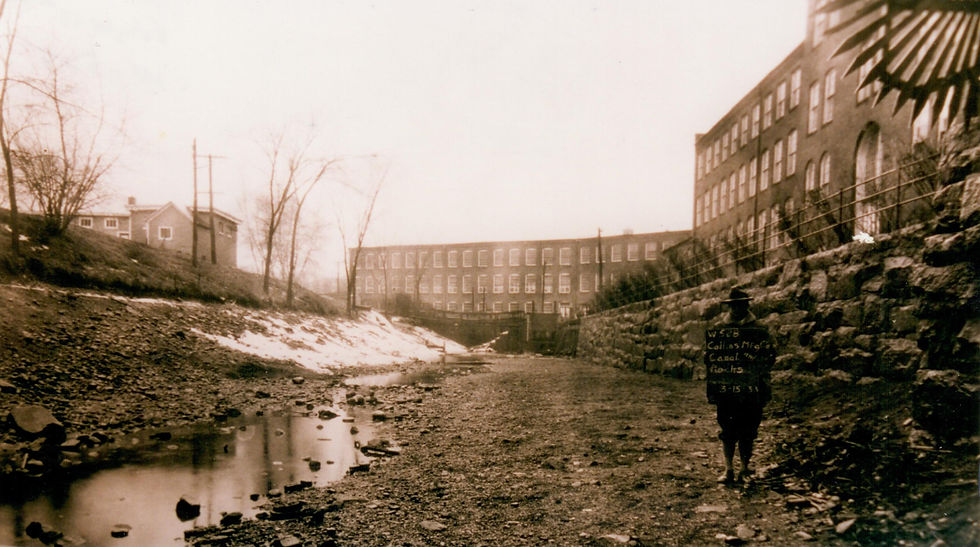
Ghost stories have always drifted through Wilbraham, Dr. Damon’s House on Chapel Street, the shadowed rooms of the Morgan House, the old Collins Mill, the Tap Room with its eerie basement, the old Hollister Block, the academy buildings at Wilbraham & Monson, and numerous other places, to mention a few. Like towns and cities everywhere, we gather these tales, pass them along, and sometimes add our own shiver to the telling. But ghost stories aren’t just for fright. We share them to understand loss, explain the unexplainable, and keep the past breathing just a little longer.

Across centuries, ghost lore has followed humanity like a shadow. Long before writing, people whispered of spirits beside the fire or scratched them onto cave walls. The ghost, in one form or another, has always walked beside us.
In the Middle Ages, ghosts were “revenants”, souls with unfinished business, often trapped in Purgatory. They returned not to terrorize but to ask for prayers, confession, or correction of a wrong. Monks recorded such encounters as warnings and reminders that the living and dead were spiritually tied.
The Protestant Reformation fractured these beliefs. With Luther and Calvin rejecting Purgatory entirely, ghosts suddenly had no place in official doctrine. Some dismissed them as imagination; others feared they were demonic tricks. Still, in quiet villages and rural parishes, old stories endured. People trusted the tales handed down by parents and grandparents more than theological debate.
The Enlightenment of the 1700s brought sharper skepticism. Thinkers like David Hume insisted ghosts lacked reliable evidence. Yet instead of fading, they moved into literature, haunting Gothic novels with guilt, longing, and secrets that refused to be buried.
Then, in the 19th century, ghosts returned in force. Spiritualism swept America and Europe. Parlors filled with table-rapping and whispered séances. Mediums promised messages from lost loved ones. Even royalty was rumored to seek comfort from the beyond. Writers like Dickens and M.R. James gave the era its own haunted conscience, while scientific societies started investigating unexplained phenomena using early tools and methods.
By the 20th century, ghosts wandered into laboratories, clinics, theaters, and radios. Freud linked hauntings to repression; Jung saw them as archetypes. Ghost hunting entered popular culture with tape recorders, thermometers, and later EMF meters. Films and TV broadened the ghost’s role, making it both entertainment and a mirror of society’s deeper anxieties.
Today, ghost stories travel faster than ever, spread through livestreams, TikTok videos, and blurry clips shared worldwide. Belief hasn’t waned; it has multiplied. Some say hauntings are leftover energy. Others point to trauma, psychology, or digital glitches. And still, the fascination remains.
Modern ghost hunting blends curiosity, technology, and an age-old desire to understand the unknown. Investigators use EMF detectors to track electrical anomalies, infrared thermometers to spot sudden cold spots, spirit boxes to sift voices from static, and recorders to capture EVPs, sounds unheard by the human ear. Night-vision cameras document what the eye might miss. Each tool tries to bridge the narrow gap between our world and whatever might stand just beyond it.
From medieval spirits begging for prayers to modern investigators scanning empty rooms for flickers and whispers, the ghost has always mirrored our fears, our grief, and our hope that death is not the end. For most of my life, I never truly believed in the paranormal. But after an experience in the summer of 2010, an incident that took place inside Fisk Hall on the grounds of Wilbraham & Monson Academy, I found my mind opening to possibilities I hadn’t considered before. I still question, and I still search for logical explanations, but when none can be found, I’m left to wonder whether some things simply lie beyond our understanding.
And here in Wilbraham, the stories continue. Whether it’s a strange sound drifting through an old homestead, footsteps echoing in the academy’s historic buildings, or the lingering legends of houses long gone, these tales are part of our town’s past. They connect us to those who lived here before us, farmers, teachers, mill workers, and families whose memories linger in the fields, woods, and winding roads.

As long as Wilbraham treasures its past, its ghosts, imagined or otherwise, will remain. Watching. Wandering. Whispering from the edges of our history, reminding us that every old town holds more stories than any of us will ever truly know.


Comments