
A Town Forged in Conflict: Wilbraham’s Military Beginnings
- Dec 18, 2025
- 5 min read
Settlement in the Fourth Parish of Springfield, today known as Wilbraham and Hampden, began during a tense and uncertain period in colonial America. The region was being settled during the long struggle between France and England for control of North America. Although there were moments when open warfare paused, the rival powers were steadily strengthening their armies and fortifications in anticipation of renewed conflict. This uncertainty shaped life on the Massachusetts frontier, and the settlers of the Fourth Parish lived with the constant awareness that war could return at any time.
As families established farms and homes in the parish, they also sought greater independence from the parent town of Springfield. Efforts were made to gain separation, but these attempts were unsuccessful for many years. One reason was Springfield’s heavy responsibility for defending the frontier of Hampshire County. The town was required to provide men, supplies, and leadership to protect outlying settlements from Indian attacks, which were frequent during periods of imperial conflict. These demands strained local resources and made it difficult for Springfield to agree to the loss of territory or population.
Despite these challenges, the settlers of the parish did not shy away from military service. During the French and Indian conflicts, several local men entered the field. Among them was Capt. Samuel Day, Lieut. Thomas Merrick, Ensign Abel Bliss, and soldiers such as Timothy Wright, Philip Lyon, William King Jr., Paul Langdon, Daniel Cadwell, Isaac Colton, Aaron Bliss, Samuel Warner, and Moses Warriner. Their service laid the foundation for what would become a strong and enduring military tradition in the town.
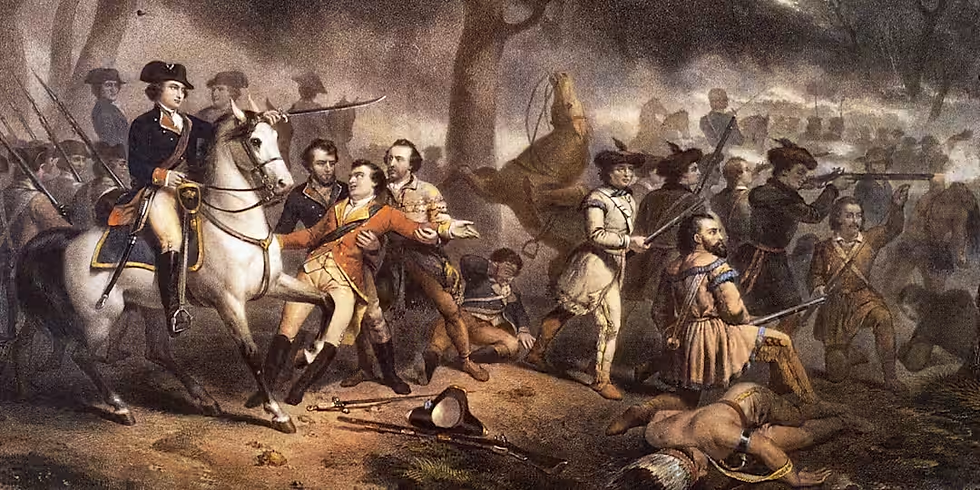
By the time tensions between Great Britain and the American colonies escalated in the 1760s and early 1770s, the people of Wilbraham were already accustomed to hardship and defense. Many of the town’s settlers were descendants of men who had fought in earlier Indian wars, including King Philip’s War. Military duty was viewed as a responsibility of citizenship, and the martial spirit of the town long predated the outbreak of the Revolutionary War.
As resistance to British authority grew, Wilbraham took deliberate steps to prepare. Able-bodied men were enrolled in the militia, and a company of minutemen was organized, ready to march at a moment’s notice. In July 1774, town leaders Daniel Cadwell, William King, Moses Stebbins, Eleazer Smith, John Stearns, John Bliss, and Ezra Barker were appointed to draft resolutions expressing the town’s opposition to British policies and its support for colonial rights. That October, another committee was formed to oversee correspondence and inspection, ensuring that the town remained aligned with the growing patriot movement.
Major John Bliss played a prominent role during this period. He represented the town at the Northampton Convention and was later chosen as a delegate to the Provincial Congress held at Concord. His participation placed Wilbraham directly within the political heart of the resistance movement. The town’s commitment was further demonstrated when 124 residents signed the non-consumption agreement, pledging to boycott British goods. This act reflected widespread support for the American cause.
Although patriot sentiment dominated, there were a few residents who initially favored the Crown. Moses Bliss, a well-known lawyer from Springfield with ties to Wilbraham, was among those sympathetic to British authority. However, as the war progressed and public support for independence solidified, loyalist influence diminished, and open expressions of Toryism largely disappeared from the town.
The Revolutionary War effectively began for Wilbraham on the day of the Lexington alarm in April 1775. When word reached the town that fighting had broken out between colonial militia and British troops, Capt. James Warriner immediately led his company of minutemen toward Boston. They served for approximately ten days, standing guard and helping to contain British forces in the early, uncertain days of the conflict.
This company included men whose names would appear repeatedly in town and military records, representing families deeply invested in the cause of independence. Their prompt response demonstrated Wilbraham’s readiness to defend colonial liberties.
Another important unit raised largely in Wilbraham was Capt. Paul Langdon’s company. Drawn primarily from the town and neighboring communities, the company served in several campaigns, including the difficult and dangerous expedition into Canada. Some members fought at Quebec, where American forces suffered heavy losses. Service in this campaign tested the endurance and resolve of the soldiers, many of whom faced extreme cold, illness, and inadequate supplies.
Wilbraham’s contributions did not end with the opening years of the war. In the winter of 1776–1777, men from the town served at Ticonderoga under Capt. Daniel Cadwell as part of Col. Danielson’s regiment. The long march, harsh weather, and extended service placed tremendous strain on the soldiers, and disease claimed many lives.
One of the most distinguished units raised in the town was Capt. James Shaw’s company was attached to Col. Charles Pynchon’s regiment. This company served in Vermont and New York during the critical Saratoga campaign of 1777. The men fought at Bennington and in the surrounding region, contributing to the series of events that led to the surrender of British General John Burgoyne. This victory marked a turning point in the war and brought international recognition to the American cause.
Beyond these organized companies, Wilbraham men served in numerous capacities throughout the war. Some were drafted for nine months’ service, others enlisted for six months or longer in the Continental Army. Their service took them to distant posts and exposed them to constant danger.
Notably, free Black men also served from Wilbraham, including Joseph Cutt and Caesar Merrick, reflecting the broader participation of the community in the struggle for independence. Their service stands as an important part of the town’s history.
The cost of war was high. Twenty men from Wilbraham lost their lives during the Revolutionary War. Some were killed in battle, while others died from disease, exposure, or the lingering effects of military service. These losses were deeply felt in a small agricultural community where every man’s labor mattered.
Following the war, Wilbraham, like much of Massachusetts, faced economic hardship. These difficulties contributed to Shays’ Rebellion, during which a small number of local men joined the insurgent movement. However, the town was more strongly represented among those who supported the government. Many Wilbraham men served under General William Shepard, defending the courts and maintaining public order. Members of the Chaffee family were particularly prominent, with nine answering the roll call in defense of the law.
During the War of 1812, Wilbraham was politically divided, with many residents favoring peace and aligning with the Federalist Party. Even so, several local men served in the conflict against Great Britain, continuing the town’s tradition of military involvement.
That tradition reached another peak during the Civil War. When hostilities began in 1861, Wilbraham once again responded with determination. Nearly 200 men entered the Union Army, and more than 30 others served in the Navy. With a population of just over 2,000 in 1860, this meant that roughly one in every ten residents served in uniform. Not all returned home, and some remain buried on distant southern battlefields.
Their sacrifice is remembered today through the monument that stands in the center of Wilbraham, a lasting reminder of the town’s long history of service, sacrifice, and devotion to the principles upon which the nation was founded.


Comments